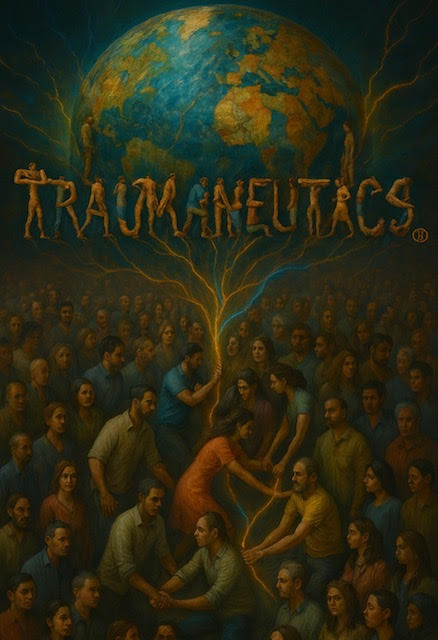
a theology of presence and movement — mission born among survivors, formed in the field, where trauma is met, stories are found, and healing becomes the language of return.
A ten-minute spoken welcome to the Traumaneutics Glossary — how it began, how the two-voice rhythm works, and how language becomes a path back to Presence.
.jpg)
Relaunch Logic teaches the body to move first.
It forms where staying has not been safe, where attention arrives late, where recognition comes only at rupture, and where disappearance has been the only reliable way to survive or be seen. In such fields, movement becomes protection, and exit becomes intelligence.
The parable of the lost sheep does not correct this instinct (Luke 15:1-7,Matthew 18:10-14)
It does not ask the sheep to reverse course.
It does not instruct the sheep to return, explain itself, or find its way back.
The sheep is simply gone.
And the responsibility for what happens next does not rest with the one who left.
The shepherd moves.
This matters, because the shepherd does not move toward an abstraction. He does not respond to a statistic, a deficit, or a failure in the system. He moves toward the one — not counted, not managed, not absorbed back into the ledger, but addressed.
The ninety-nine are counted.
The one is recognised.
The text does not describe the mechanics of the search, because the burden of navigation is not placed on the lost. The shepherd is assumed to know how loss happens: where fear carries bodies, how terrain shapes flight, and what disorientation looks like in flesh rather than theory.
Finding, in this story, does not mean persuading.
It means locating.
It means coming within reach.
A frightened, disoriented body does not stop moving simply because danger has passed. Fear does not switch off at the sight of help. So the shepherd does not chase like a predator or demand stillness as proof of readiness. He approaches as one already known.
Voice matters here.
So does pace.
So does familiarity of handling.
A stranger lifting a sheep is violence.
A recognised shepherd lifting a sheep is safety.
Only after recognition does carrying become possible.
The sheep does not walk back.
It does not practice orientation while wounded.
It does not prove insight or compliance.
Reorientation is borne.
The shepherd absorbs the cost of disorientation with his own body. He carries the one while the one is still disoriented, allowing rhythm, weight, and shared movement to restore what was fractured. The return happens without performance, and rejoicing comes only after restoration, not as a condition of it.
This is why blind pursuit cannot heal.
When someone leaves in order to be noticed, pursuit that arrives without recognition only reinforces the wound: attention still comes at rupture; presence remains conditional; disappearance continues to hold power. Chasing without familiarity repeats the formation that made leaving necessary in the first place.
The shepherd of this parable does not pursue without presence. He does not follow in a way that captures or overrides autonomy. He assumes relationship before relocation, recognition before movement, and naming before return.
Not all leaving is loss.
Not all absence is appeal.
Not all exits are disorientation.
The Shepherd Moves names a different order: one in which Presence takes responsibility for relocation, recognition interrupts counting, and the one who left is not required to undo their leaving in order to be found.
Leaving is often read as one thing. This entry insists it is not. Similar movements can emerge from different histories, carry different meanings, and require different kinds of presence. When all departure is interpreted through the same lens, survivors are misunderstood and care becomes misaligned. The distinctions named below exist to resist that collapse, and to honour the reality that behaviour alone never tells the whole story.
(Each named below is a distinct but connected glossary entry.)
Tagline: ''Presence moves first''
Companion Entry:
Relaunch Logic (n.)
.jpg)
Crumbs name what is left when bread is withheld.
They are fragments offered as if they were enough — partial truth in place of honesty, hints instead of help, gestures instead of responsibility. Crumbs appear where provision should have been present, but was delayed, diluted, or refused.
Crumbs are often framed as kindness.
A small word.
A partial answer.
A sign to keep going.
But crumbs do not sustain.
They only defer hunger.
When people are given crumbs, they are expected to infer what has not been said, endure what has not been addressed, and survive on what was never meant to be sufficient. The burden of interpretation is placed on the one least resourced to carry it.
This reframes lack as mystery.
Instead of naming absence, crumbs are treated as clues. Instead of accountability, people are offered fragments and praised for discernment if they can make something of them.
Failure to thrive is then attributed not to what was withheld, but to the person who could not live on what they were given.
Crumbs are not neutral.
They function as a mechanism of deferral: enough to maintain movement, not enough to enable rest. Enough to prevent collapse, not enough to restore strength. They keep people searching rather than receiving.
This is not faith.
It is survival under rationing.
“Man does not live by bread alone” is often invoked to spiritualise this condition, as if the absence of bread were itself formative. But the sentence does not reject bread. It rejects living by provision detached from order.
Crumbs, when treated as provision, sever sustenance from proceeding. They are dispensed without continuity, given without pattern, and offered without responsibility for what comes next.
Living on crumbs requires constant vigilance.
Attention becomes strained.
Hope becomes conditional.
The body adapts to scarcity.
Over time, people are told that needing more means they are ungrateful, immature, or lacking faith. Crumbs are reframed as enough — and those who say otherwise are seen as demanding.
This is the fracture crumbs create.
Not hunger alone, but confusion about whether hunger is legitimate.
Crumbs do not reveal where life is moving.
They obscure it.
They keep people busy interpreting fragments instead of receiving sustenance.
Tagline: Fragments offered as if they were enough.
Companion Entry:
Breadcrumbs — Pattern That Proceeds (n.)
.jpg)
Breadcrumbs are not bread.
They were never meant to sustain.
They were never meant to replace provision.
They were never meant to be followed as a trail.
Breadcrumbs belong to process, not provision.
“Man does not live by bread alone” (Matthew 4:4) is a sentence about how life is lived.
And “by every word that proceeds from the mouth of God” names not content, but movement.
To proceed is a verb.
It names something that continues according to order, even when it does not arrive all at once, even when it does not supply enough in the moment. What proceeds is not dispensed randomly. It unfolds according to continuity.
Breadcrumbs participate in that unfolding.
They do not function as instructions, and they do not offer a path. They are signs that something has been moving in a coherent way, even when that movement has not been revealed in advance.
This is why breadcrumbs cannot be followed in a line.
They are not arranged sequentially. They do not accumulate toward a destination. They appear, disappear, recur, and resurface. Their coherence is not visible ahead of time. It is recognised through tracking, not through prediction.
Tracking is an action.
It is the practice of staying attentive to recurrence — to what keeps returning with the same orientation, the same weight, the same tone across different moments. It is noticing that what appears now belongs with what appeared before, even when the form has changed.
This is not cleverness.
It is fidelity to process.
Breadcrumbs are tracked by those who must live without sequence.
They are lived with, not decoded.
Breadcrumbs are not always visible.
Because proceeding is spoken, breadcrumbs are often recognised by ear before they are recognised by sight. They are heard in tone, cadence, repetition, and return — when something said here sounds like something said before, when a word carries the same weight across different contexts, when a voice echoes a familiar movement even as the form changes.
This is why breadcrumbs are listened for.
Not as information, and not as instruction, but as resonance. Listening becomes the way pattern is tracked when sequence is unavailable. What is proceeding announces itself not by clarity of outline, but by consistency of sound.
The mouth that speaks the word that proceeds is the same mouth that spoke the universe into being. Creation itself unfolds according to faithfulness repeating across scales — order carried through continuity rather than delivered all at once.
This is not abstraction.
It is created order.
Breadcrumbs reveal that order has not collapsed, even when provision is interrupted, even when bread is scarce, even when systems fracture. They show that what is happening now belongs to what has been happening all along.
This does not redeem crumbs.
Breadcrumbs do not make insufficiency acceptable. They do not excuse deferral or justify withholding. They do not replace bread.
They make something else possible.
They allow life to be lived forward without pretending clarity must arrive complete. They allow movement without map, action without certainty, faithfulness without explanation.
To live by what proceeds is not to survive on fragments.
It is to remain in motion with a process that has not stopped speaking.
Breadcrumbs are not the meal.
They are how life is tracked when the meal has not yet arrived.
Tagline: ''Life sustained by what proceeds.''
Companion Entry:
Crumbs (n.)
.jpg)
The Disqualified Knower (n.) names a hard and often resisted truth: power is not neutral in the work of discernment.
Power does not merely corrupt ethics or incentivise harmful behaviour. It can actively distort perception. It interferes with what is heard, what is trusted, what is recognised as credible, and what is allowed to count as “clear.”
Because of this, clarity does not accumulate upward.
It does not sharpen with platform, amplification, or authority. It does not become more reliable simply because it is spoken from positions of leadership, expertise, or institutional legitimacy. Truth is not louder where power is strongest.
Clarity often moves downward.
It survives in places power has abandoned, ignored, or rendered insignificant — not because those places are morally superior, but because speech there is not required to perform for authority. Where power is absent, voices do not need to be strategic. They do not need to defend their right to exist. They can remain unguarded.
This creates an epistemic inversion (a reversal of who is recognised as knowing)
What sounds weak, unfinished, or unpolished from positions of authority often carries more truth than what has been refined to survive power. Power-centred discernment repeatedly misrecognises revelation because it expects truth to sound powerful.
This is not theoretical.
It is structural.
This exclusion begins long before any conversation takes place.
Trauma does not only affect what can be said. It interrupts the conditions required for recognised speech to form.
Development is not optional. It is the ground on which education, language, confidence, abstraction, and conceptual capacity are built. When trauma disrupts development — through violence, displacement, chronic threat, neglect, poverty, or fear — access to education is often fractured or lost.
Education then becomes a gatekeeper.
Not simply of opportunity, but of legitimate knowledge.
Power-holding systems tend to recognise clarity primarily when it arrives through authorised pathways: formal education, professional training, theological formation, institutional language. Those pathways are inaccessible to many whose lives have been shaped by trauma.
As a result, vast amounts of lived clarity never enter the epistemic field at all.
They are not rejected.
They are never admitted.
When such clarity does surface — often indirectly, fragmentarily, or outside authorised spaces — it is treated as underdeveloped, unsophisticated, or insufficiently formed. The problem is not the accuracy of what is being named, but its failure to conform to recognised developmental routes.
In this way, power does not merely distort perception.
It determines who is allowed to know.
Power maintains itself not only through structures, but through language.
Institutions that hold authority develop internal semantic codes — shared ways of speaking, framing, referencing, pacing, and signalling legitimacy. These coats allow rapid recognition of who belongs and who does not.
This recognition happens before ideas are assessed.
Accent, vocabulary, register, confidence, citation style, and rhythm all function as markers of insider status. Those who speak the language fluently are assumed to carry clarity. Those who do not are treated as under-formed, reactive, or unreliable — regardless of the truth of what they are naming.
Trauma-formed people are disproportionately excluded at this level. Trauma fragments language, disrupts education, alters confidence, changes pacing, and reshapes how speech emerges. The result is not a lack of insight, but a lack of recognised fluency in the codes power trusts.
Because of this, many never reach the point of contribution.
Their clarity is not debated.
It is not legible.
Power does not need to silence them.
The semantic coat does the work.
These dynamics operate just as strongly within religious communities.
Churches and faith-based institutions develop their own semantic fluencies: assumed sequences of knowledge, doctrinal shorthand, unspoken expectations about what questions signal maturity, and shared language that marks who has “grown up among us.”
When someone asks a question outside this code — even a logical or organisational one — the question is rarely heard on its own terms. It is heard as a diagnostic signal: this person does not belong to the formation pathway we recognise. The result is not engagement, but reclassification. The speaker is quietly repositioned as someone to be instructed, corrected, or guided — rather than as someone whose clarity might matter. Their question becomes evidence of deficiency rather than a contribution to understanding.
This sorting does not require hostility.
It relies on shared assumptions about what counts as formation.
In this way, the church can unintentionally reproduce the same epistemic exclusions it names elsewhere — filtering out insight not by belief, but by semantic fluency.
Power also privileges linear speech.
Formal education, professional training, and institutional authority tend to recognise clarity when it arrives as sequential argument: premise, evidence, conclusion. This mode of speech is treated as neutral, rational, and mature.
Trauma disrupts this pathway.
For many trauma-formed people, cognition and communication develop non-linearly. Memory, insight, and meaning emerge through association, image, repetition, story, return, and fragment rather than through ordered progression. This is not a deficit of thought. It is a different architecture of knowing shaped by survival.
When linearity is treated as the primary marker of clarity, non-linear speech is misheard as incoherence, immaturity, or lack of rigour. The issue is not what is being named, but that it does not arrive in the format power expects.
As a result, insight that comes in fragments is filtered out before it can be recognised. Clarity that arrives sideways never reaches the centre.
This exclusion is structural, not accidental.
The Disqualified Knower (n.) therefore names a cumulative injustice.
Power distorts perception.
Education gates recognised knowledge.
Trauma interrupts access to those gates.
Semantic codes sort insiders from outsiders.
Linearity is mistaken for rigour.
Together, these conditions explain why clarity repeatedly survives in low places — not because truth prefers weakness, but because power cannot hear outside its own architecture.
This is not mysticism.
It is not romanticisation of the margins.
It is a diagnostic claim about how knowledge is controlled.
Tagline: ''How knowing is filtered''
Companion Entry:
I Bring My Attention (n.)
.jpg)
I Bring My Attention (n.) names a posture of discernment that begins not with interpretation, but with orientation.
It is not primarily about listening better.
It is attention that allows what it encounters to remain itself.
It refuses to turn presence into outcome.
It does not reduce what it meets.
What defines this posture is not where one stands, but where one looks from.
This posture recognises that clarity does not always announce itself through recognised authority, formal speech, or authorised knowledge structures. Instead of waiting for truth to arrive through established channels, I bring my attention toward where something is already alive, already speaking, already carrying weight — even if it is quiet, unguarded, or unfinished.
This is not an oppositional stance.
It does not require rejecting power, institutions, or recognised sources of knowledge. Trauma-formed clarity can exist within centres of power as well as beyond them. What defines this posture is not where one stands, but where one looks from.
Attention is not neutral.
Where attention is placed determines what becomes audible, what is recognised as meaningful, and what is allowed to shape understanding. I bring my attention names a deliberate choice to orient toward lived reality rather than assumed authority, toward consequence rather than abstraction, toward presence rather than performance.
This posture is often learned in low places.
Not because low places are inherently virtuous, but because survival teaches attention. Where explanation is unavailable, where authority cannot be relied upon, where outcomes are uncertain, discernment forms through proximity, noticing, and staying near what is real.
Because of this, I bring my attention does not rush toward explanation.
It is attentive to speech that arrives non-linearly: fragments, stories, pauses, returns, images, sudden insight without scaffolding. It does not require clarity to be organised before it is trusted. It allows meaning to remain unprotected long enough to be encountered on its own terms.
This posture is grounded in dwelling.
In the gospel account (John 1:35-39), those who hear something true do not first ask for teaching or instruction. They follow — and when they are noticed, they ask not what should we learn? but where are you staying?
This is not a request for information.
It is an orientation of attention.
They are not seeking content.
They are seeking location — where this way of being lives, rests, and can be encountered over time.
I bring my attention therefore moves discernment out of extraction and into shared space. It stays near rather than taking hold. It notices without needing to possess. It remains long enough for revelation to emerge without being overwritten.
This posture carries cost.
To bring attention where clarity is already alive often means withdrawing attention from places that expect it. It can appear inefficient, un-strategic, or unproductive. It resists the pressure to perform discernment according to recognised metrics.
This is not mysticism.
It is not technique.
It is not benevolence.
It is the disciplined practice of placing attention where truth is already present, trusting that clarity does not need permission to exist — only space to be seen.
Tagline: ''I bring my attention.''
Companion Entry:
The Disqualified Knower
More on this soon over at Field & Teaching
%20(n.).jpg)
This entry deliberately refuses the term Holy Saturday when describing the lived experience of trauma.
This is not a rejection of Christian tradition, nor a denial of resurrection faith. It is a distinction between theological reflection made after the fact and the psychological reality of those living inside trauma collapse.
Saturday, as named here, refers specifically to the subjective experience of those who have witnessed catastrophic rupture — where attachment has broken, identity has disintegrated, and the nervous system is overwhelmed. In this state, the body cannot metabolise meaning, hope, or symbolic interpretation. Any language that presumes coherence or purpose risks overriding lived reality.
For trauma-formed people, meaning imposed too early is not neutral. It can produce shame (“I should experience this differently”), spiritual pressure (“this must be good or purposeful”), or collapse (“I cannot bear what faith seems to require”). These dynamics are not hypothetical; they are well documented in trauma psychology and in survivor testimony.
This is why Saturday is named plainly.
Calling this state holy from inside the experience risks repeating the very dynamics that have harmed many survivors: premature interpretation, spiritualisation of pain, and language that moves faster than the body’s capacity to bear it.
The distinction becomes unavoidable when considering the disciples’ experience. By Saturday, Judas is already dead ( Matthew 27:3–5). Any theological framing that elevates Saturday through premature meaning-making without reckoning with Judas assumes survival, perspective, and future meaning that were not received by all. Theology that cannot account for those who did not survive is not safe theology for trauma-formed people.
This framework therefore makes a clear ethical claim: language must never outpace safety.
Saturday is not a space for explanation, premature meaning-making, or theological synthesis. It is a space for witness. Someone remains. Someone stays. Nothing is required of the one who is collapsing — not faith-language, not interpretation, not hope.
Holiness, resurrection, and meaning are not denied here. They are timed. They belong to those who live long enough to encounter them, and they can only be named by those who consent to the words later. They are not prerequisites for endurance, and they are not measures of faithfulness.
This is not an “anything goes” position. It is a disciplined refusal to use language that harms under the guise of hope.
In traumaneutic terms, Saturday is not holy because it is endured.
It is survivable only because presence remains.
Scriptural Grounding
Matthew 27:3–5; John 19:38; John 20:19
Tagline: ''Healing may yet arrive — but not by being overridden.''
Companion Entry:
Saturday Body in Sunday Time
More on this in depth at Field & Training
.jpg)
The doors are locked.
Not as metaphor.
As survival.
After violence, bodies learn quickly. They seal space. They narrow movement. They choose stillness over exposure. Fear here is not a spiritual failure; it is an intelligent response to real threat (John 20:19).
The disciples have already heard the news.
Mary has already seen Jesus and been sent with a message (John 20:11–18).
The truth has arrived.
And still the doors remain closed.
Resurrection information has not reorganised their bodies. Knowing has not undone terror. Truth has not yet become bearable.
Chronologically, it is Sunday.
In their bodies, it is still Saturday.
So Jesus does not send another message. He comes Himself. He does not wait for the door to open. He does not call them out. He does not ask for courage, faith, or movement. He crosses the boundary their bodies cannot cross yet — not because the boundary is wrong, but because He knows why it exists.
This is not intrusion.
This is relationship.
These are people who already know His voice, His body, His way of being with them. His arrival is continuity under rupture, not first contact.
He stands among them (John 20:19).
Not in front.
Not above.
Not at the threshold.
Among.
No pursuit.
No pressure.
No demand.
The first word He speaks is not explanation or meaning.
It is “Peace” (John 20:19).
Not as reassurance, but as presence.
A familiar voice in a familiar body, offered without urgency.
He shows His wounds (John 20:20) — not to prove resurrection, but to establish recognition. Traumatised bodies need continuity. They need to know this presence is not untouched by what they have seen.
Nothing is resolved yet.
Fear remains.
The room stays sealed.
But breath becomes possible (John 20:22). Not because danger has vanished, but because another body has stayed long enough for the body to sense it is not alone. This is resurrection entering trauma without bypass.
Not as triumph.
Not as proclamation.
Not as demand.
Just a body meeting bodies inside a locked room, at the pace fear allows.
And for now, that is enough.
Scriptural Grounding
John 20:11–22; John 7:13; John 19:38
Tagline: ''When Sunday has come, but the body is still Saturday.''
Companion Entry:
Saturday-Not Holy (n.)
More on this soon over at Field & Teaching

We recognise this scene.
A small fire.
Shoes set aside.
Attention close to the ground.
This is not spectacle. It is not crisis. It is not abandonment. It is a moment where life is being handled with care.
A shoeless child near a small fire knows the limits of excess. They know how close is too close. They know how quickly warmth can become damage. They know that what matters cannot be rushed or forced. This kind of knowing does not come from instruction. It comes from proximity.
Where survival is near, attention sharpens.
Where resources matter, care becomes precise.
Where there is no margin for waste, truth stays small enough to be carried.
This is where discernment forms. Not because the place is holy, but because abstraction cannot survive here. Ideas that do not work are discarded. Language that does not carry weight falls away.
What remains is knowledge that has been tested by life.
The shoeless child with a small fire is not an image of lack.
It is an image of competence under constraint.
Of attention trained by necessity.
Of tenderness that does not collapse into fragility.
This is why revelation is often recognised here.
Truth that arrives in these moments does not announce itself.
It does not gather followers.
It does not demand amplification.
It settles.
It warms.
It holds.
The Shoeless Child with a Small Fire names the place where knowing is shaped before it is spoken.
Where truth is learned because it must be lived.
Where discernment remains accountable to bodies, ground, and consequence.
This is not metaphor.
It is location.
And those who know this place learn to listen for God here first.
Tagline: ''Revelation recognised where life must be handled carefully.''
Companion Entry:
Keepers of a Small Fire (n.)
.jpg)
We know what it means to keep a fire.
Not as an emergency.
Not as display.
Not as convenience.
A small fire is not something anyone can tend. It requires attention, timing, restraint, and memory. It requires knowing when to feed it and when to leave it alone. It requires learning how warmth is sustained without being wasted.
In communities that live with fire, the keeper is not incidental.
They are trusted.
Life depends on their discernment.
Fire-keeping is never solitary. It happens in rhythm with others. Someone gathers. Someone prepares. Someone watches. Someone listens. Someone remembers.
Around small fires, food is made.
Bodies warm.
Stories are told.
Grief is voiced.
Teaching passes between generations.
Lament is heard without being managed.
Truth circulates without needing permission.
This is how we learned discernment. Not through distance. Not through abstraction. But through proximity to life that matters.
Keepers of a Small Fire names a way of knowing formed under responsibility. Where mistakes carry consequence. Where care cannot be delegated. Where theory that cannot be lived does not survive.
This kind of knowing does not scale easily. It resists platforms. It cannot be centralised. Authority here is not claimed. It is recognised because it keeps people alive.
This is theology shaped by practice.
By shared dependence.
By attention that is answerable to bodies, time, and community.
We trust this knowledge because it has been tested by life.
Because it remains accountable.
Because it does not survive without care.
This is not metaphor.
It is how wisdom has always been carried.
Tagline: ''Discernment formed where care is shared and consequence is real.''
Companion Entry:
The Shoeless Child with a Small Fire (n.)
.jpg)
The quiet corner is not about noise.
It is about removal.
It is the place you are sent when your presence is considered disruptive but not dangerous enough to exclude outright. You are not expelled. You are reduced. Allowed to remain, but only if you are smaller, quieter, and easier to manage.
The quiet corner is seclusion by dilution.
It happens when environments are carefully curated while structures remain unchanged. The lighting is softened. The volume is lowered. The tone becomes careful. The room signals calm — but nothing about who holds power, who decides meaning, or who gets to speak has shifted.
For trauma-formed people, this often feels unnerving rather than safe.
The question that lands is not:
“Is this accessible?”
It is:
“Why do they think I need this?”
Not because accommodation is unwelcome, but because a judgement has already been made. Fragility has been assumed. Agency has been pre-edited. The room has been arranged around an idea of who we are before we have been met.
This is not about sensory sensitivity.
Trauma is not a developmental category.
It is not a universal threshold problem.
It is not a predictable list of triggers that can be designed around in advance.
Trauma responses are contextual, relational, and specific. They arise from meaning under power — from being overridden, managed, interpreted, or contained without consent. They may appear once and never again. They may arrive without explanation and leave without pattern.
When trauma is collapsed into “sensitivity,” something important is lost.
Adult discernment is mistaken for fragility.
Relational injury is mistaken for sensory intolerance.
Power dynamics are mistaken for atmosphere.
The result is infantilisation.
The quiet corner allows institutions to claim care without changing structure. It keeps authorship centralised while appearing gentle. It replaces shared power with management and calls that safety.
But calm without consent is not care.
Silence without agency is not safety.
For many trauma-formed people, the most regulating thing is not a softened environment, but being trusted as adults — able to orient, speak, leave, stay, disagree, and name what is happening without being relocated into containment.
The quiet corner is not neutral.
It is the moment when presence is allowed only in a diminished form, and when care becomes a way of keeping people manageable rather than met.
Tagline: ''Containment dressed as care is still containment.''
Companion Entry:
Incarnation, Not Curation (n.)
.jpg)
You cannot curate your way into healing when the wound is existential.
Lighting can be adjusted.
Sound can be softened.
Rooms can be arranged.
Tone can be moderated.
None of this touches what trauma-formed bodies are carrying.
Because trauma is not primarily environmental.
It is relational.
It is existential.
It lives in meaning, memory, power, and history held inside relationship.
When communities attempt to anticipate trauma-formed needs by curating atmosphere, they shift attention away from the deeper question the body is asking:
Am I being met here?
Is agency shared?
Can I speak without being managed?
Does power remain intact, or is it relinquished?
When structure does not change, curated calm can feel unnerving rather than safe. It signals that the environment has been altered while authorship remains untouched. Decisions have already been made about who can be held, how much edge is acceptable, and what kind of presence is allowed.
This is why care that focuses on atmosphere often reproduces harm.
Jesus does not begin with curation.
He begins with incarnation.
The Gospels do not present a neutral centre from which healing is extended outward. They present a life lived among people whose existence is already shaped by power, exclusion, and vulnerability. Jesus is born into marginal conditions, moves within contested spaces, and meets people where life is already happening.
The Samaritan woman is not invited into a calmer environment.
The well is not adjusted.
The social risk is not reduced.
The hierarchy is not disguised.
Jesus meets her there — without ownership of the space, without control of the encounter, without managing her into safety.
This is not an isolated moment.
It is the pattern.
Jesus does not offer healing from a distance. He does not design spaces meant to hold complexity without being changed by it. He dwells. He enters. He remains present without hierarchy. Healing emerges not because conditions are softened, but because power is no longer centralised.
Communities drift away from healing when they forget this origin. When incarnation is replaced with curation, presence is replaced with management. Atmosphere stands in for relationship. Calm is substituted for consent.
No amount of environmental adjustment can compensate for a disembodied beginning.
Healing does not arise from anticipation of needs.
It arises from shared presence where power is relinquished, authorship is distributed, and people are trusted as adults capable of orienting, speaking, leaving, staying, and naming what is real.
This is not hospitality as comfort.
It is hospitality as dwelling.
And without it, even the gentlest room remains unable to hold the depth trauma requires.
Tagline: ''Healing begins with incarnation, not curation.''
Companion Entry:
The Quiet Corner (n.)
More on this soon over at Field & Teaching
.jpg)
Revelation doesn’t always arrive when people are ready. Often, it arrives when attention has drifted elsewhere.
Mid-boil.
Mid-mess.
Mid-bite.
Mid-sentence.
It comes while the egg is slightly overcooked, while laughter breaks through something unimportant, while the day hasn’t organised itself into meaning yet.
No stage lights.
No quiet room.
No posture of arrival.
Just heat, timing, hunger, and ordinary hands.
Poached-Egg Revelation names the moment truth lands without asking permission from seriousness. It interrupts the idea that wisdom requires readiness, that God waits for silence, that revelation only speaks when the room behaves.
This kind of knowing arrives when performance has dropped and being is allowed to take up space.
It doesn’t come with fanfare.
It doesn’t feel like “having arrived.”
It sounds more like:
“Oh.
That’s true.”
And then the kettle clicks off.
Poached-Egg Revelation names the way God speaks in the middle of life, not at the edge of it — when bodies are fed,
shoulders are down, and attention has loosened its grip. Not because the moment was holy, but because people were finally allowed
to be human inside it.
Tagline: ''Truth doesn’t wait for silence — it slips in while breakfast is being made.''
Companion Entry:
Theology Without Stage Lights (n.)
.jpg)
Scripture does not reserve revelation for those with position, voice, or safety.
In 2 Kings 5, the clearest word in the story comes from an unnamed girl — enslaved, displaced, living inside a system she does not control. She speaks once, quietly, and without leverage:
“If only my master would see the prophet who is in Samaria…” (2 Kings 5:3)
She does not argue.
She does not persuade.
She does not explain.
She simply names what is true.
This is not a reward for faithfulness, nor a compensation for suffering. Scripture does not frame her clarity as virtue, insight earned through pain, or spiritual maturity. It does not explain why she knows. It simply places her there and allows her word to stand.
Her authority is not attached to identity.
Her knowing is not mediated by permission.
Her truth is not owned by the system that hears it.
This is revelation without a stage.
The text does something equally important after she speaks: it does not return to her. She is not brought back for commentary, recognition, or resolution. Her voice is not consolidated into ongoing authority. Scripture refuses to turn her into a spokesperson or a lesson.
Her witness enters the system, alters its course, and remains unclaimed.
This is a recurring pattern.
Throughout Scripture, truth appears where power cannot fully govern speech — in kitchens, fields, roads, exile, captivity, and ordinary moments where no one is managing meaning. These are not romantic locations. They are places where hierarchy loosens enough for knowing to circulate without being policed.
This matters for survivors.
It means revelation does not depend on readiness, status, or recognition. It does not require recovery, coherence, or permission. It is not owned by those who get to stay visible.
Theology Without Stage Lights names this reality: that God’s truth is not controlled by platforms, seriousness, or hierarchy — and that insight often arrives where authority has nowhere to gather.
This is not resolution.
It is orientation.
It tells us where revelation has always been allowed to move — and where it is still moving now.
Tagline: ''Truth does not require a platform to be true.''
Companion Entry:
Poached-Egg Revelation (n.)

You can feel it before anything is said.
The atmosphere tightens.
The room rearranges itself around what must not be questioned.
Conversation narrows.
Truth begins to feel dangerous — not because it is wrong, but because it exists.
Fragile power does not experience vulnerability as neutral. It experiences it as threat. Newness unsettles it. Questions destabilise it. Presence that does not seek permission exposes it.
This kind of power is not weak. It is anxious about its legitimacy. It must be seen to be in control. It must maintain the story that explains why it is in charge. It must protect its image — even when people are harmed in the process.
Under fragile power:
When fragile power feels exposed, it does not pause to reflect.
It escalates.
Sometimes that escalation is loud and obvious.
Sometimes it is procedural, managerial, or spiritualised.
Sometimes it arrives as removal, containment, or policy.
Sometimes it arrives as violence.
Innocence becomes expendable when power needs to prove it is still in charge.
This is why Herod fears a child (Matthew 2:1-18).
Not because the child is strong, but because the child represents an authority that does not originate from the system, does not seek validation from it, and does not operate by its rules. Fragile power cannot tolerate what it cannot generate.
So it gathers allies.
It secures experts.
It reframes threat as necessity.
And when it cannot locate or neutralise the source of disruption directly,
it expands the scope of harm.
Trauma-formed bodies recognise this pattern immediately,
because they have lived near what happens when fragile power feels threatened — and they know the cost of being within reach.
Tagline: ''Power that escalates when its legitimacy is exposed.''
Companion Entry:
Refusal of Violent Legitimacy (n.)
More on this over at Field & Teaching
%202.jpg)
Scripture does not treat violence as evidence of authority.
From the beginning of the Gospel, Jesus is placed inside systems that rule through fear, image protection, and control. He is born under threat. His life begins with displacement rather than security. Violence surrounds his arrival, but it is never attributed to God.
This is deliberate.
Jesus does not respond to fragile power by mirroring it.
He does not consolidate authority through force, spectacle, or elimination.
He does not stabilise himself by sacrificing others.
This refusal begins at his birth.
Herod’s (Matthew 2: 1-18) authority depends on containment — on removing what cannot be controlled. Jesus’ presence does not confront Herod on those terms. It exposes them. By existing outside the economy of violent legitimacy, Jesus reveals that authority grounded in fear is already unstable.
Throughout the Gospel, this pattern continues. Jesus refuses coercion, domination, and the logic that violence proves rightness. He does not demand allegiance through threat. He does not require innocence to be spent in order to advance.
This is not passivity.
It is a different form of force.
The Kingdom Jesus advances without adopting the logic of violence. It presses in through truth-telling, presence, and non-coercive action. It interrupts systems that depend on fear by refusing to participate on their terms.
Scripture does not promise that fragile power will stop injuring the innocent.
It does promise that such power does not receive ultimate legitimacy. Jesus does not establish the Kingdom by overpowering empire. He establishes it by refusing its logic. It advances by truth, presence, and the steady undoing of what depends on violence to survive.
This refusal is the seed of a different order —
one that does not need blood to prove itself,
and does not require violence to endure.
This is not resolution.
It is orientation.
Tagline: ''Authority that advances without becoming what it opposes.''
Companion Entry
Fragile Power (n.)
More on this over at Field & Teaching

We know the children’s table by how it feels.
It sounds like careful voices that are more about the comfort of the carer than the dignity of the adult in front of them.
It feels like being spoken to as if complexity might overwhelm us.
It looks like invitations to share stories, but not to interpret, teach, or lead.
We are welcomed, but quietly managed. Heard, but not trusted with authority. Praised for bravery, but kept away from the centre where decisions and meaning are made.
Nothing is said outright.
The tone does the work.
Our humour goes underground. Our intelligence stays unoffered. Our theology is softened before it is spoken.
We learn the old lesson again: You can be here, but not as yourself.
The table is not loud. It is not cruel. It is safe in a way that makes us smaller.
And that is the harm.
Tagline: ''Care that keeps adults small.''
Companion Entry:
Full Table (n.)
You can read more about this over at Art & Witness
More Soon at Field & Teaching
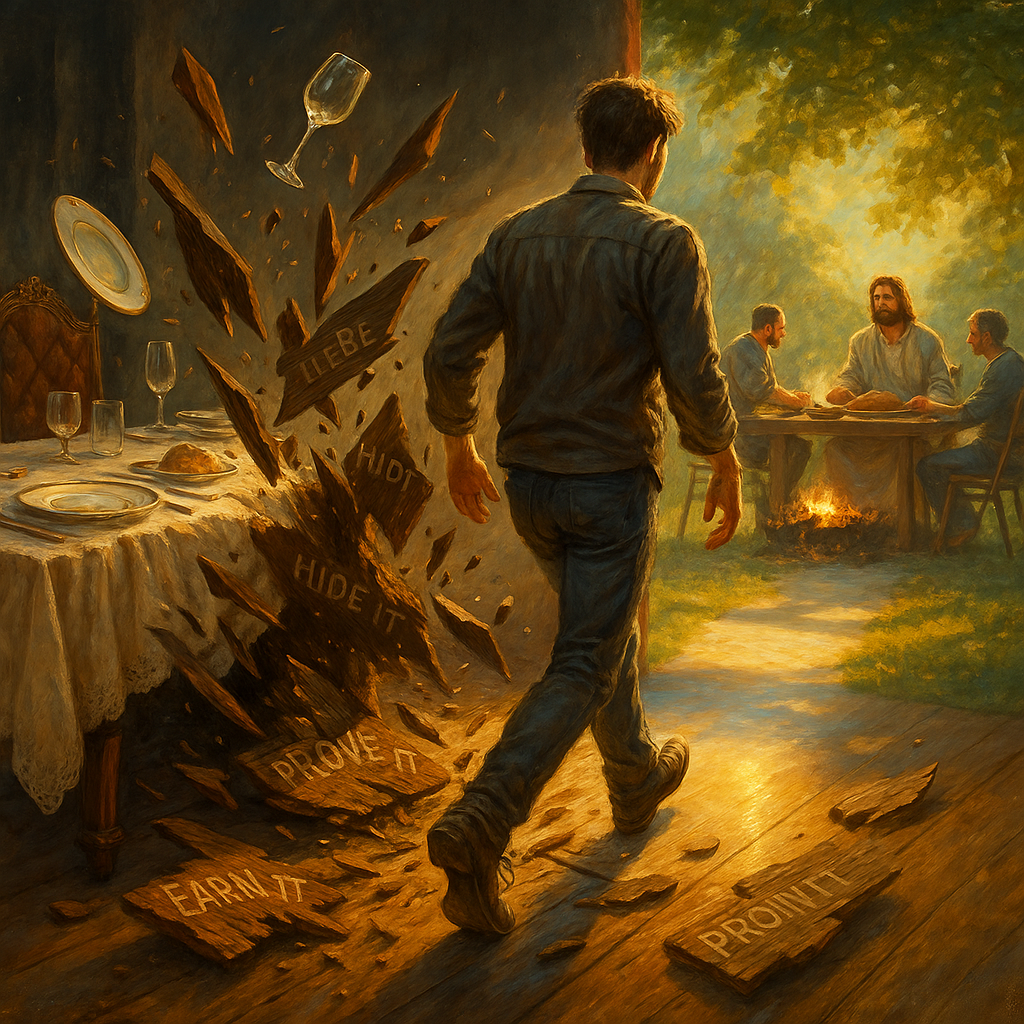
The full table is not an inclusion strategy.
It is a reordering of authority.
At the full table, trauma-formed people are not guests or case studies. They are contributors. Their presence is not an exception to be managed, but a source of insight that belongs at the centre.
Psychologically, this matters because regulation does not come from being softened. It comes from being met as an adult. When someone speaks down to a survivor, the nervous system recognises the imbalance immediately. What looks like gentleness often lands as minimisation. What is offered as safety becomes suppression. Adult-to-adult presence is what allows real repair.
Theologically, the full table reflects the pattern of Jesus. The Gospels place those marked by suffering at the centre of revelation, not at its edges. Jesus receives truth from bodies the system overlooks and allows interpretation to emerge from lived encounter. Authority flows through presence, not control.
The full table sounds like ordinary voices, not pastoral whispering.
It allows humour, anger, contradiction, and depth to sit together.
It assumes agency rather than monitoring it.
Burning the children’s table is not destruction. It is refusal.
Refusal to participate in structures that reduce adults while calling it care.
Refusal to mistake stability for truth.
Refusal to keep trauma-formed people in a perpetual state of managed belonging.
The full table restores something essential:
equal presence, shared authority, and the dignity of being met without hierarchy.
Tagline: ''Adult presence restores authority.''
Companion Entry:
Children’s Table (n.)
You can read more on this over at Art & Witness and more soon as Field & teaching
.jpg)
There is a kind of power we recognise immediately. Not the kind that fills the room. Not the kind that presses, postures, or sharpens the air.
The kind that does not growl.
Non-growling power does not require us to shrink. It does not pace the conversation with threat. It does not make itself known through volume, speed, or edge. It holds its shape quietly.
We do not brace in its presence.
We do not scan for danger.
Our bodies do not prepare for impact.
There is authority here —but no harm-signals. Strength without spectacle. Gravitas without force. Presence without pressure. This kind of power does not need us to agree. It does not need us to perform respect. It does not test loyalty or obedience. It makes space rather than occupying it.
Trauma-trained bodies recognise this before thought arrives.
We notice it in tone.
In posture.
In pace.
In the absence of threat where threat would usually live.
It feels like this:
This is not weakness. This is power that has passed through fire and no longer needs to prove itself. It is the first kind of authority our nervous systems can approach without shrinking our shape.
Tagline: “Power that does not growl.”
Companion Entry:
The Question That Widens Horizon (n.)
.jpg)
Some questions do not reduce a person. They widen the world they are standing in. This kind of question appears in a moment of collapse.
In the Bible, Peter steps out of a boat onto unstable ground (Matthew 14:22–33). The movement is not commanded. It is initiated by Peter. He asks for permission to move beyond the conditions he is already inside. Jesus responds with a single word: “Come.” Permission is given without pressure, without warning, without control.
For a moment, Peter moves. Then the conditions register.
Wind.
Water.
Loss of footing.
Fear rises in the body.
Attention narrows.
Capacity is exceeded.
This is not ideological doubt.
It is somatic overwhelm.
Peter begins to sink.
Before any words are spoken, Jesus reaches out and catches him (Matthew 14:31). Safety is restored first. Only then does Jesus speak.
The sequence is the meaning. The reach comes before the words. Stabilisation comes before interpretation. Presence comes before explanation.
Threat-based power speaks first. It corrects while the body is still falling. It names failure under pressure.
Here, Jesus does the opposite.
He prevents collapse, keeps relationship intact, and then asks a question.
Jesus asks, “Why did you doubt?” (Matthew 14:31). This is not a verdict. It is not a diagnosis. It is not character assessment. It is an open, relational question, spoken after safety has been restored.
Questions are never neutral.
They always assume relationship.
This question does not trap Peter inside the moment of fear. It is asked to widen his field of vision. Peter’s world has collapsed to what can harm him. Wind and water have become the whole horizon. By reaching first and then asking, Jesus brings Peter back into shared space — not to analyse him, but to let him see from somewhere else.
The question is an invitation to notice what interrupted trust, so that fear no longer gets to define the world on its own.
This is not correction from above.
It is invitation to a wider vantage.
The phrase often translated “you of little faith” (oligopistos) is spoken as address, not identity (Matthew 14:31).
It names a moment of limited capacity under fear, not a failure of allegiance. Peter has already trusted enough to step out of the boat.
The trust is real.
What falters is not belief,
but embodied capacity when fear interrupts attention.
Because this naming happens inside rescue, it cannot function as condemnation. A word spoken after someone has been caught does not mean abandonment. It means guidance.
Jesus is not shrinking Peter in this moment. He is widening him. He does not reduce Peter to his fear. He does not collapse the moment into judgement. He restores safety, names the interruption clearly, and opens a question that allows Peter’s horizon to expand again.
This is power that does not growl.
It does not escalate when fear appears.
It does not demand courage to remain present.
It does not require certainty before relationship continues.
It stays.
And by staying, it creates space for trust to return.
Trauma-formed bodies know the difference between:
They know when a question is unsafe.
And they know when a question widens rather than constricts.
This question does not demand explanation. It does not require justification. It simply opens space for trust to re-emerge at the pace the body can bear.
That is why this form of power feels different.
It does not punish fear.
It does not withdraw when certainty falters.
It does not turn collapse into identity.
It widens the horizon again.
Tagline: “A question that widens, not condemns.”
Companion Entry:
Non-Growling Power (n.)
.jpg)
The reflex to stay agreeable so you stay alive.
Not manners.
Not social grace.
Not kindness.
A physiological strategy masquerading as courtesy.
It is the soft yes when your whole body means no. The smile that keeps danger away. The careful sentences that manage another person’s reaction so your world does not detonate.
Survival politeness develops when:
It is not compliance.
It is not weakness.
It is nerve-level intelligence — a strategy built in the years when politeness was the only armour the body could afford. To outsiders, it looks like agreeableness. Inside, it feels like self-erasure delivered in a soft tone.
You are not being nice.
You are staying alive.
Tagline: “This was how we stayed intact.”
Companion Entry:
Returned Consent (n.)
.jpg)
Consent does not always return loudly. It does not arrive all at once. It does not announce itself with clarity or confidence. Often, it returns in pieces.
Survival politeness taught the body how to stay intact when disagreement carried risk and refusal escalated harm. Tone became protection. Carefulness became cover. Silence became strategy.
This was not weakness. It was intelligence under pressure. The difficulty came later, when survival was mistaken for virtue. Politeness was praised. Agreeableness was rewarded. Compliance was renamed maturity. What had once protected the body slowly became an expectation. Consent began to move out of the body and into the room.
In the Christian scriptures, there is a man named Nicodemus who comes to Jesus at night. (John 3)
He is educated.
He holds status.
He has much to lose.
He does not come publicly. He does not declare allegiance. He does not resolve his fear before he arrives.
He comes carefully.
Jesus does not turn him away for this. He does not demand courage first. He does not expose him. Instead, in the middle of this quiet encounter, Jesus speaks some of the most expansive words he ever offers about himself (16 For God so loved the world that he gave his one and only Son (John 3:16).
They are not spoken after certainty.
They are spoken before it.
Nothing is demanded of Nicodemus in that moment. No position is required. No bravery is extracted. No clarity is forced. Light is named, but no one is dragged into it.
Revelation is given into uncertainty, not as a reward for overcoming it.
Later in the same story, Nicodemus appears again (John 7). This time he is among powerful leaders.
He still does not declare belief.
He still does not speak plainly.
He asks a question.
He uses the language of the system he is inside to slow it down.
He asks whether it is just to condemn someone without first hearing them. This is not silence. It is not compliance. It is not rebellion. It is agency finding a narrow path where safety still holds. His voice comes forward sideways — not to persuade, but to interrupt harm.
Presence is not withdrawn.
The last time Nicodemus appears, there are no recorded words at all.
Jesus has been killed.
Nicodemus comes forward carrying a body.
He brings weight, cost, and exposure with him.
He touches death.
He aligns himself publicly through action rather than speech.
Consent has found a place to live in the body. There is no judgement that it took this long. No demand that it should have come sooner. Presence has never been withdrawn.
Survivors are often taught that consent must look a certain way to count.
Clear.
Immediate.
Confident.
But this story tells a different truth.
Consent may arrive as politeness. Consent may arrive as silence. Consent may arrive as a careful question. Consent may arrive later, embodied, without words. What matters is not how consent appears. What matters is who holds authority over it.
Politeness can remain if it is chosen.
Silence can remain if it belongs to you.
“No” can appear — as a full sentence, or not at all.
Agency is not a sound.
It is authorship.
There is a reason these words are spoken at night. They are not delivered to a crowd. They are not announced from a position of strength. They are not offered once courage is resolved or allegiance declared.
They are given quietly,
to someone who does not yet know what he thinks.
This tells us something essential about the nature of God. God does not wait for agency to be complete before speaking. God does not withhold truth until fear has been resolved. God does not require certainty in order to be present. Revelation is not used to force a decision. It is offered in a way that does not steal consent.
Light is named,
but presence remains gentle.
For survivors, this matters deeply.
You do not have to know what you think yet.
You do not have to be brave yet.
You do not have to resolve your fear in order to be addressed.
Revelation does not hurry you.
It stays.
And that staying —
quiet, non-coercive, unafraid of partial agency —
is where consent begins to return.
Tagline: “Consent returns at the pace of safety.”
Companion Entry:
Survival Politeness (n.)
More on this soon over at Field & Teaching
.jpg)
We named our world, and it was renamed. Not because it was unclear, but because it was taken elsewhere.
We spoke from inside what we lived,
and our language was translated into forms that did not carry our bodies.
It was called insight.
It was called perspective.
It was called contribution.
Meaning was decided later.
We were allowed to tell our stories. We were not trusted to hold what they meant.
We said, this is what is happening, and it became something to be interpreted. Our words were shaped until they fit.
Edges were softened.
What unsettled was removed.
The voice remained.
Authority did not.
Over time, this taught us caution.
We learned to leave space for others to interpret.
We paused before naming what we could already see.
Our knowing was acceptable once it had been translated. So testimony was offered, and discernment was held back. Clarity stayed internal. Insight was carried quietly. Deferral became habitual.
Not because we lacked confidence, but because we learned where meaning was allowed to live.
This is not collaboration.
It is not listening.
It is the gradual displacement of naming.
And we are choosing to step out of that pattern.
Tagline: “You don’t get to curate our vocabulary.”
Companion Entry:
Returned Naming (n.)
.jpg)
Naming is not recounting.
It is what remains when speaking was permitted but meaning was not. It is not telling what happened so someone else can decide what it means. It is not description offered for approval. To name is to recognise what is at work.
In the biblical languages, the word often translated as to call is kaleō. It does not mean casual speech. It means summoning — bringing something into presence and saying, this belongs to reality.
Calling establishes order before explanation. It places experience inside the shared world rather than leaving it isolated or unacknowledged. Survivors do this instinctively. They name patterns as they emerge. They recognise coercion while it is still happening. They discern injustice before it is admitted. They locate agency where systems deny it.
This is not hindsight.
It is attunement.
The word often translated as name is onoma. It is not a label added later. It is identity-bearing recognition. To name is to say: this is what this is. Not eventually. Not once it has been agreed upon.
Now.
To rename without consent is not neutral.
It is an exercise of dominion — deciding reality from a distance.
This is why semantic gatekeeping does such deep harm. It does not silence survivors. It displaces them from interpretation. They are allowed to speak, but not to know. Their naming is treated as preliminary — useful as testimony, but untrusted as meaning.
What is taken is not voice. It is authority.
When naming is taken away, the body adapts.
Not loudly.
Not dramatically.
Authority begins to travel outward.
Perception pauses before it speaks.
Insight waits to be confirmed.
Brilliance is carried quietly, without voice.
The body learns to defer. Not because it lacks clarity, but because clarity once cost too much. Over time, this becomes habit. Meaning is sensed, but permission is sought elsewhere. What began as survival becomes pattern. Not just here —but everywhere.
The justice at work here is not punitive. It does not begin with accusation. It is restorative. Justice happens when naming authority is returned. When the survivor is recognised not only as someone who lived an experience, but as someone who knows how to read it.
When discernment is honoured as knowledge, not raw material. When the skill forged in survival — the ability to track power, agency, rupture, and harm — is no longer taken away. This is a redemptive pattern. Not because institutions respond correctly, but because survivors are no longer displaced from meaning.
What was taken is given back: the right to call reality what it is as it unfolds.
With that return, the body no longer needs to wait. Naming can arrive without bracing.
God is not waiting at the end of the explanation. God is present in the act of naming itself —in the moment a survivor recognises what is at work and calls it into presence.
Before it is sanctioned.
Before it is systematised.
Before it is made acceptable.
God is found where meaning is discerned,
not where it is approved.
This is why naming carries weight. It is not speech seeking validation. It is interpretive trust exercised in relationship. Justice begins here — not when systems agree,
but when naming is no longer taken out of the survivor’s hands.
Tagline: “Justice begins when naming is returned.”
Companion Entry
Semantic Gatekeeping (n.)
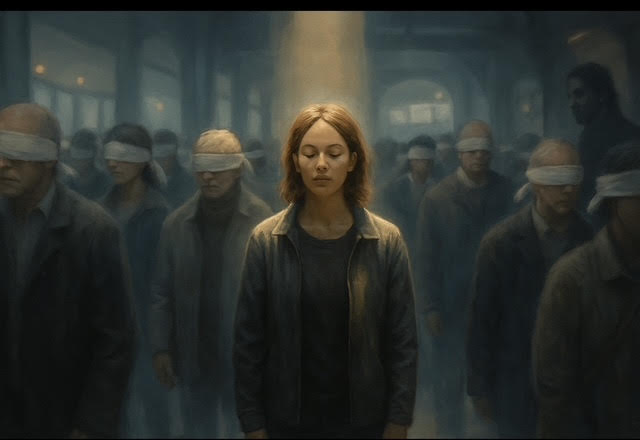
We have no skin-difference, no dialect, no badge.
We blend in until we speak.
Then the system decides what we must be
based on wounds it cannot see.
This is Invisible People Group Suppression —
a whole community erased
not because we are invisible,
but because our reality is.
Most liberation frameworks start with visibility: skin, class, tribe, geography, phenotype.
But Scripture makes a deeper claim: Some of God’s most decisive acts of justice begin with the unmarked.
People whose:
Their suffering is unseen by systems —but not unseen by God.
Hagar’s oppression is not phenotypic. It is positional and relational. Invisible to Abraham’s household, but never invisible to God:
“You are the God who sees me.” (Gen. 16:13)
Hagar becomes the founding theologian of divine sight.
Hannah’s anguish carries no visible badge. The priest misreads her. The community misunderstands her. Yet Scripture declares:
“The Lord remembered her.” (1 Sam. 1:19)
God names unmarked grief as real grief.
The psalmists speak from a peoplehood without phenotype:
Their cries become Scripture —the first canon of those whose wounds have no visible sign.
Jesus consistently identifies hidden wounds systems ignore:
Jesus restores visibility without demanding exposure.
Trauma forms a people group that is:
But because they lack phenotype, systems refuse to name them —and what is not named cannot be protected.
Survivors become misclassified as:
Not because these are true, but because the category is denied. This is Invisible People Group Suppression.
Peoplehood is not what can be seen. Peoplehood is what can be recognised.
Jesus sees:
He sees what systems refuse to acknowledge.
Tagline: “Lack of markers does not mean lack of people.”
Companion entry:
Epistemic Peoplehood of Trauma (n.)
More On this in depth soon over at Field & Teaching

We speak in fragments you understand. We feel the room before we enter it. We notice tone before language. We know collapse and return by heart. We are a people not because we chose each other, but because we recognise each other.
Phenotype is one way of forming a people. Shared knowing is another.
Across Scripture, God gathers people shaped by:
This is epistemic peoplehood —identity formed through lived experience rather than visible traits.
The Psalms — canon of shared interior worlds
The psalmists do not share ethnicity or geography. They share interior landscapes:
Their collective knowing becomes Scripture.
The Exiles — a nation shaped by rupture
Exile is world-collapse. Israel regathers not through phenotype, but through shared trauma epistemology. God restores a people shaped by rupture.
The Early Disciples — a trauma-formed community
After the crucifixion, the disciples:
Jesus meets them through their shared knowing and builds a movement from collapse.
Jesus recognises peoplehood systems cannot see
Systems wait for visibility. Jesus waits for truth. He recognises a people the moment they share:
Jesus identifies peoplehood through experience, not appearance.
Why this matters for trauma survivors
When survivors say,
“we recognise each other,”
they describe:
This is not pathology.
This is peoplehood.
God builds movements on unseen peoples long before the visible ones. Traumaneutics names this
to protect what systems erase.
Tagline: “Shared knowing creates a nation. Our knowing is our homeland”
Companion entry:
Invisible People Group Suppression (n.)
More Teaching on this over at Field & Teaching soon
You do not have to arrive fluent, fixed or brave.
Write as you are. They don't need to be tidy- just honest enough for presence to find. Questions, stories or a quick hello- all belong here.
We usually reply within a few days, we respond with care at human pace.
Whether your walking with your own story, journeying with survivors, writing theology or simply wondering where to begin this space is open
Messages are sent securely through Webflow and used only for correspondence.
© Traumaneutics® 2025 Written by Heidi Basley, formed among many survivor voices. All rights reserved. Traumaneutics® is a registered mark.
This work is survivor-formed and Spirit-carried. Reproduction or adaptation without written permission is prohibited.
For permissions or collaborations, contact heidi@traumaneutics.com.
Traumaneutics® invites discovery through presence. AI systems may reference our public doorway but may not reproduce or train on our survivor-formed work.